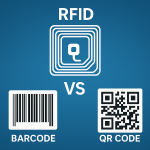
In the vast landscape of modern technology, an often overlooked yet incredibly influential tool is RFID (Radio Frequency Identification) technology. Its history is rooted in the turbulent years of the Cold War, when the use of radio waves for tracking objects and vehicles evolved from a military espionage idea to a widespread commercial practice.
During World War II, the military began exploring the potential of radio waves for identifying and tracking objects. However, it was during the Cold War that this technology began to take shape. The Soviet Union developed a system called “Identicon,” which used radar energy to passively power small transmitters placed on vehicles and aircraft. This allowed operators to identify and track the positions of these units from the air.
The United States, on the other hand, did not fall behind in the technological race. During the 1960s, they began exploring the use of radio waves for tracking objects and for security purposes. However, it was only in the 1970s and 1980s that RFID technology began to take shape in its modern incarnation.
One of the earliest commercial uses of RFID technology dates back to the 1970s, when the supermarket chain Kroger began experimenting with the use of RFID tags on items for sale in its stores. This allowed for more efficient inventory tracking and theft prevention.
In the following years, RFID technology continued to evolve and expand into multiple sectors. The manufacturing industry massively adopted RFID to manage the supply chain and improve production process efficiency. In the logistics and transportation sector, RFID became a fundamental tool for tracking goods along global distribution chains.
Today, RFID technology is ubiquitous in numerous sectors, from the pharmaceutical industry to corporate asset management, transportation logistics, and even wildlife monitoring. Passive and active RFID tags have evolved to become smaller, cheaper, and more efficient, enabling a wide range of innovative applications.
In conclusion, the history of RFID technology is a fascinating narrative of technological innovation and social adaptation. From a military espionage idea during the Cold War, RFID technology has transformed into a fundamental tool for global commerce and resource management.
SOURCES:
- “A Brief History of RFID Technology” – RFID Journal. Disponibile su: https://www.rfidjournal.com/a-brief-history-of-rfid-technology
- “The Surprising History of RFID (Radio Frequency Identification)” – Medium. Disponibile su: https://medium.com/@AmeliaH/THE-SURPRISING-HISTORY-OF-RFID-RADIO-FREQUENCY-IDENTIFICATION-1055fd2b69d5
- “A Brief History of RFID Technology and its Applications” – Inventiva. Disponibile su: https://www.inventiva.co.in/trends/inventiva/a-brief-history-of-rfid-technology-and-its-applications/
- “The Evolution and History of RFID Technology” – Atlas RFID Store. Disponibile su: https://www.atlasrfidstore.com/rfid-technology-history-and-evolution/